Podcast: Play in new window | Download | Embed
Why do our brains naturally lean toward optimism about the future? How can optimism bias both help and hurt us? Can we train ourselves to see life through a more optimistic lens?
In this podcast episode, Joe Sanok discusses the fact that we have an optimism bias and that it’s not necessarily a bad thing with Dr. Tali Sharot.
Podcast Sponsor: Alma

As a clinician, you probably chose this field because you wanted to support people in navigating challenges and finding personal growth. But many mental health care providers end up spending almost as much time on billing, insurance, and other documentation as you do in sessions with clients.
That’s where Alma can help.
Alma supports clinicians in building rewarding private practices—with simplified insurance credentialing in under 45 days, enhanced reimbursement rates, and guaranteed two-week payback.
Plus, a free profile in their searchable, filterable directory—making it easy for clients who are the right fit for your practice to find you.
Learn more about how Alma could support you in building a thriving private practice at helloalma.com/joe.
Meet Dr. Tali Sharot

Dr. Tali Sharot is a leading neuroscientist, author, and professor of cognitive neuroscience at University College London. Her groundbreaking research explores how emotion, motivation, and social factors influence our beliefs and decision-making. She is best known for her work on the optimism bias—our brain’s natural tendency to view the future more positively than the past or present.
Dr. Sharot is the author of three acclaimed books, The Optimism Bias, The Influential Mind, and Look Again, and her TED Talk on optimism has been viewed millions of times worldwide. Through her research, writing, and public speaking, she helps us understand how we can use the brain’s natural tendencies to make better choices, stay motivated, and lead healthier, more resilient lives.
Visit Affective Brain Lab and listen to Dr. Sharot’s TED Talk.
In This Podcast
- What is the Optimism Bias?
- Pros and cons of optimism bias
- Developing an optimistic lens
- Dr. Sharot’s advice to private practitioners
What is the Optimism Bias?
An optimism bias … is people’s tendency to imagine the future as being better than the past or the present, and seeing things with relatively rosy-colored glasses. (Dr. Tali Sharot)
It is very common to have an optimism bias, as Dr. Sharot discovered in her research.
However, there are also pros and cons to having a perpetually optimistic tendency to life. Depending on how you use it, it can either help or hinder you!
Pros and cons of optimism bias
On the positive side, good expectations of the future can be motivating, encouraging us to try and be dedicated.
Optimism, even if it’s biased, meaning it’s better than what reality shows, it’s still helpful in motivating us to try, to put in effort, and that’s why optimism is often related to success in many different fields. (Dr. Tali Sharot)
Additionally, having an optimism bias can also be beneficial for your mental and physical health. People get better because they take better care of themselves.
It’s not that they’re thinking, “Oh, I’m going to be fine and I don’t need to do anything.” No, they’re thinking, “I’m going to be fine because I’m going to put in the effort.” So optimism is not so much as we see it … and thinking that everything will magically be okay. It’s more about thinking, “I can make things okay.” (Dr. Tali Sharot)
On the other hand, there can be some negative aspects of having an optimism bias.
One of these cons could be that, when someone functions with a strong optimistic bias, they may not take enough precautionary measures when they are necessary, such as not wearing a seatbelt or putting on a helmet.
Developing an optimistic lens
Dr. Tali Sharot explains that, like with other aspects of human life, developing an optimistic attitude to life can be done over time, even if you came from a more pessimistic background, because it’s a combination of nature and nurture.
When something good happens to optimists, what they tend to do … is say, “Ah, this worked well because I’m a really good engineer, and … that means I may be good with other sorts of things I may need to do in the future.” They generalize, they relate it to themselves, to things that are constant within themselves, and then they generalize it. (Dr. Tali Sharot)
Optimists generalize their good qualities across all aspects of life and consider themselves capable of handling whatever comes their way.
If and when something bad happens, they see it as an isolated event and not as a reflection of their character. Pessimists do the exact opposite!
Dr. Sharot’s advice to private practitioners
Emotions can easily and quickly be picked up on. Use this to your advantage in the therapy room. And vice versa, be mindful of your own emotions too. Take care of yourself to take better care of others.
Books mentioned in this episode:
Dr. Tali Sharot – The Influential Mind: What the Brain Reveals About Our Power to Change Others
Dr. Tali Sharot – The Optimism Bias: Why We’re Wired to Look on the Bright Side
Dr. Tali Sharot – Look Again: The Power of Noticing What was Always There
Sponsors Mentioned in this episode:
- Get your ticket today for the MHM conference in October! Use the discount code JOE to get 10% off any ticket!
- Learn more about how Alma could support you in building a thriving private practice at helloalma.com/joe.
Useful links mentioned in this episode:
- Visit Affective Brain Lab and listen to Dr. Sharot’s TED Talk.
- Apply to work with us one-one-one!
Check out these additional resources:
Practice Metrics that Matter with Tory Krone and Madeline Larsen | POP 1249
Events – click on the event’s dropdown
Sign up to join the free webinars and events here
Practice of the Practice Podcast Network
Free resources to help you start, grow, and scale
Apply to work with us — a decision-making matrix for your next steps
Meet Joe Sanok
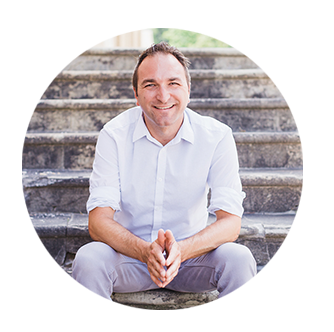
Joe Sanok helps counselors to create thriving practices that are the envy of other counselors. He has helped counselors to grow their businesses by 50-500% and is proud of all the private practice owners who are growing their income, influence, and impact on the world. Click here to explore consulting with Joe.
Thanks For Listening!
Feel free to leave a comment below or share the social media below!